Volunteering for Biodiversity: Planting Fruit Trees and Native Hedgerows in Parc
Mon, Tiefencastel (GR)
31.10.2026
Environment
Get involved in volunteering for nature conservation, biodiversity, and sustainable landscape management! During this rewarding one-day conservation project in Parc Ela, you will make a visible and lasting contribution to the environment. Take the opportunity to actively support the preservation of valuable habitats while experiencing the stunning natural landscapes of Graubünden.
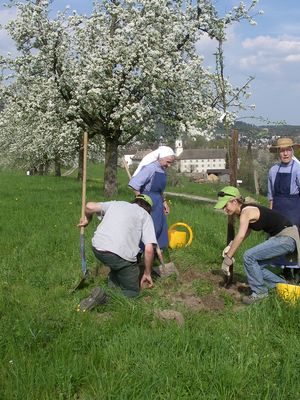
On this planting day in Mon, Parc Ela, you will work alongside other volunteers to plant locally adapted fruit trees and create a species-rich native hedgerow. Your efforts will help establish valuable habitats and food sources for a wide range of wildlife, while strengthening biodiversity and enhancing the ecological quality of the landscape for the long term.
The activities include preparing the soil, digging planting holes, and professionally planting the trees and shrubs. The fruit trees will be protected from browsing wildlife with individual tree guards, while the native hedgerow will be fenced to ensure optimal growth conditions for the local shrub species.
In addition to hands-on conservation work, you will gain fascinating insights into biodiversity, environmental protection, sustainable landscape management, ecological connectivity, and habitat enhancement.
Register now and become part of a meaningful planting initiative that promotes biodiversity and species diversity in Parc Ela!
Current project status
Duration:
Saturday, 31 October 2026, from 09:00 a.m. to 4:00 p.m.
Location:
- Veia Vedem 13, 7458 Mon
- Arrival by public transport: 08:45 a.m. at Tiefencastel railway station, shuttle service provided by Parc Ela to Mon
- Meeting point: 09:00 a.m. in Mon (exact parking location will be communicated later)
Schedule:
- 09:00 a.m. Welcome in Mon and introduction to the Nature Conservation Volunteer Day
- 09:30 a.m. Planting of fruit trees and a native wild hedge
- 12:00 p.m. Lunch, kindly provided by the property owners
- 01:00 p.m. Continuation of planting activities and construction of browsing protection measures
- 04:00 p.m. Conclusion of the volunteer day followed by a shared afternoon snack
Throughout the day, participants will gain fascinating insights into various environmental topics, such as edible berries and herbs, the importance of hedgerows as habitats, and the value of native plant diversity.
Introduction:
Volunteers will receive thorough instructions from environmental experts and will be accompanied throughout the entire assignment. The introduction will take place directly on site. No prior knowledge or preparation is required.
Supervision:
Participants will receive interesting information about the purpose and impact of the project, as well as various environmental topics. The assignment will be supervised by employees of Parc Ela.
Tasks:
- Planting fruit trees and establishing a new native wild hedge
- Installing browsing protection and fencing around trees and shrubs to protect them from wild and grazing animals
Requirements:
- Enjoyment of working outdoors in nature
- Physical fitness for a full day of fieldwork
- Sure-footedness on uneven terrain
What to Bring:
- Hiking boots
- Sturdy work clothing that may get dirty
- Sun and/or rain protection
- Day backpack with drinks and snacks
- Work gloves (if available)
- Optional: Change of clothes and spare footwear
Meeting point
Parkplatz (noch zu definieren)
Veia Vedem 13
7458 Mon, Tiefencastel (GR)
Project language
German, English

Parc Ela is located in the heart of Graubünden and unites three language cultures: Romansh, German and Italian. With steep mountain peaks and vast landscapes, the park still feels like a genuine wilderness. In the valleys, historic villages and Baroque churches remind us of the former importance of the trade routes over the Albula, Julier and Septimer Alpine passes. The park communities have joined forces to advance sustainable economic and social development. They work to preserve precious natural and cultural resources, strengthen the local economy and promote tourism close to nature.
Further volunteering opportunities for individuals
-
Volunteering: Take part in the Clean‑Up Day with IGSU
-
Repair Café Lucerne: Fix it up, don't throw it out.
-
Area sponsor against littering
Further volunteering opportunities for companies
-
Anti-litter project: volunteers wanted for clean-up
-
Foodsave – team assignment
-
Beneficial insects for the organic apple orchard: Volunteering with Naturnetz